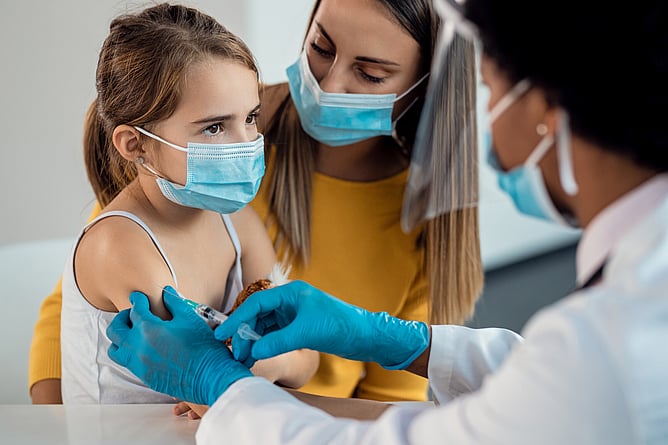
At our pharmacist-led travel clinic in Sumner, Christchurch, we sit down with a family almost every week who wants travel vaccines for kids sorted and a trip that leaves in ten days. By that point, some of the best protection just isn't possible anymore. Booking flights is the easy part. Travel vaccinations for your child need a longer runway than most parents expect.
This guide comes from our own appointments, not a repackaged government pamphlet. Our pharmacists are licensed to assess and vaccinate directly, so we see the timing mistakes, the needle fears, and the last-minute questions firsthand, week after week. What follows is what we actually tell parents at the clinic: how early to book, how to talk to your child about the shot, and what to expect on the day, so your appointment goes smoothly instead of becoming the most stressful part of your trip.
Key Takeaways
Book your child's travel vaccine appointment 4 to 6 weeks before departure. Some vaccines require multiple doses, with a few weeks between each dose to provide full protection.
Talk to your child about the vaccine in simple, honest language a few days ahead, not right before you walk in.
Bring your child's vaccination record, a comfort item, and a snack to the appointment.
Numbing cream, distraction, and choosing which arm gets the needle all genuinely reduce needle anxiety.
A pharmacist-led travel clinic can assess your child's specific itinerary without a GP referral, which usually saves time.
To prepare your child for travel vaccinations, book the appointment 4 to 6 weeks before departure, talk to your child in simple, honest language a few days ahead, bring their vaccination record and a comfort item, and ask about numbing cream if they're anxious about needles. A pharmacist-led travel clinic can assess your child's exact itinerary and vaccinate on the spot, without a GP referral.
Why Travel Vaccinations Matter More for Kids Than Adults
Children's immune systems and travel habits put them at higher exposure risk for diseases like hepatitis A, typhoid, and mosquito-borne illness, so travel vaccines for kids are often more urgent, not less, than for adults.
Kids put their hands in their mouths. Children naturally explore their surroundings by touching things like market stalls, hotel pool areas, and airport surfaces. While this is a normal part of childhood, it can increase their exposure to germs and infections such as hepatitis A, especially when travelling to destinations where certain diseases are more common.
Routine childhood vaccinations, including MMR, tetanus, and whooping cough vaccines, provide important protection but may not cover all travel-related health risks. Depending on the destination, additional vaccines such as typhoid or Japanese encephalitis may be recommended. These travel vaccinations should be discussed with a healthcare professional before your trip.
When Should You Book Your Child's Travel Vaccine Appointment?
Book 4 to 6 weeks before you fly. Some travel vaccines are given as a course of two or three doses, and your child needs time between shots for full protection to kick in.
We know six weeks feels early when you're still choosing a hotel. But here's what actually happens on a tight timeline:
Some vaccines need a second dose 4 weeks after the first, so a rushed booking means your child leaves only partially protected.
Certain destinations require proof of yellow fever vaccination that only counts as valid 10 days after it's given.
Combination vaccines (like hepatitis A and B) work best on a set schedule, and compressing it isn't always possible.
If you're already inside that window, don't panic and don't skip the appointment. Partial protection from an accelerated schedule is still far better than none. Our team can work out what's realistically achievable and prioritize accordingly.
How to Talk to Your Child About Getting a Vaccine
Use simple, honest language a few days before the appointment. Avoid the words "it won't hurt" and avoid surprising your child on the day.
Every parent handles this differently, and there's no single right script. A few things we've noticed actually help, based on hundreds of family appointments:
For toddlers and preschoolers:
Keep the explanation short. "The doctor will give you a quick little pinch to help keep you healthy and safe while we travel."
Bring a comfort item. A stuffed animal or blanket does more work than you'd expect.
Don't build it up for days in advance. One or two days' notice is plenty.
For school-age kids:
Be honest about the pinch or sting. Kids remember being told "it won't hurt" and it hurt, and that erodes trust for next time.
Let them ask questions. Curious kids often feel calmer once they understand why.
Offer a small choice, like which arm, to give back a sense of control.
For tweens and teens:
Explain the destination-specific reason. Teens respond well to actual facts about the disease risk.
Respect that some are genuinely needle-phobic, not just being dramatic. Say so and we'll adjust our approach.
Helping Kids Cope With Needle Anxiety
Numbing cream applied 30 to 60 minutes before, distraction during the shot, and letting the child sit upright on a parent's lap all measurably reduce distress during pediatric vaccinations.
A few things our pharmacists use regularly:
Topical numbing cream. Applied ahead of time, it takes the edge off the sting. Ask us about this when you book.
Distraction techniques. A phone video or chatting about the holiday works better than silence.
Positioning. Sitting upright on a parent's lap, rather than lying down, lowers anxiety for younger kids.
Breathing tricks. "Blow out the candles" breathing gives school-age kids something to focus on.
Praise after, not just before. A sticker or small reward reinforces that it's done and it went fine.
None of this is complicated. It's mostly consistency and a calm adult in the room.
What to Bring to Your Child's Travel Clinic Appointment
Pack this the night before so the morning isn't a scramble.
Item | Why It Matters | |
|---|---|---|
Child's vaccination record (Plunket book or similar) | Let's us check what's already covered and avoid duplicate doses. | |
Passport and travel itinerary | Confirms exact destinations and travel dates for accurate vaccine advice | |
List of current medications or allergies | Flags any interaction risk before we vaccinate | |
Comfort item (toy, blanket) | Reduces anxiety, especially for toddlers | |
Snack and water | Some kids feel woozy on an empty stomach. | |
A change of plans if your child is unwell | Vaccines are usually postponed if a child has a fever on the day. |
It's also worth checking SafeTravel, run by New Zealand's Ministry of Foreign Affairs and Trade, for the latest destination-specific travel advisories before you finalize your itinerary and appointment.
Common Travel Vaccines for Kids
Depending on the destination, children may need hepatitis A and B, typhoid, Japanese encephalitis, meningococcal, or yellow fever vaccines, on top of ensuring routine MMR and tetanus boosters are current.
Every itinerary is different. But these come up often for families traveling from Christchurch:
Hepatitis A — common for most destinations outside Australia, NZ, and Western Europe
Typhoid — relevant for South and Southeast Asia, parts of Africa and South America
Japanese encephalitis — recommended for extended rural stays in parts of Asia
Yellow fever — mandatory for entry to certain African and South American countries
MMR and tetanus boosters — often overlooked, but worth confirming are current before any trip
Our Travel Clinic in Christchurch reviews your child's exact route against current WHO travel health guidance, rather than handing over a generic country checklist. If you haven't already, start with our pre-travel screening questionnaire so we can put a plan together before you commit to appointment times.
What Happens After the Vaccine
Mild soreness, tiredness, or a low fever for a day or two is normal. Offer paracetamol if needed (check dosing with us first) and let your child rest.
Call us or your GP if your child develops a high fever or unusual swelling beyond the first day or two. That's rare, but worth knowing.
Ready to get your child's travel vaccines sorted with time to spare? Start your pre-travel screening questionnaire or visit our Christchurch travel clinic page for pricing and appointment details. You can also head back to our Sumner Pharmacy homepage to see our full range of health services.
Why Choose a Specialized Travel Clinic in Christchurch?
Navigating pre-travel health requirements can feel overwhelming when you’re already busy packing bags and double-checking passports. Getting your family's immunizations sorted shouldn't add to the pre-trip chaos. At our dedicated travel clinic in Christchurch, we focus on streamlining the entire process. You don't have to wait weeks for a standard GP appointment or juggle multiple referrals. Our licensed pharmacists can assess your specific itinerary, review your child's medical history, and administer the necessary shots in a single visit. We look closely at exactly where your family is heading, whether it's a resort in Fiji or a backpacking route through Southeast Asia, and build a realistic timeline that ensures your kids are protected long before the plane leaves the tarmac.
Frequently Asked Questions
How early should I book travel vaccines for my child before an international trip?
Book 4 to 6 weeks ahead. Some travel vaccines need multiple doses spaced weeks apart to reach full effectiveness.
Can my child get travel vaccines at a pharmacy instead of a GP?
Yes. A licensed travel clinic like ours can assess your child's itinerary and administer most travel vaccinations without a GP referral, which usually means faster booking.
Are travel vaccines safe for young children?
Generally yes, when matched to your child's age and health history. Our pharmacists review your child's medical background and current medications before recommending any vaccine.
What if my child is scared of needles?
Numbing cream, distraction, and letting your child sit on your lap during the shot all help. Tell us in advance, and we'll adjust our approach for your child specifically.
Do routine childhood vaccines count as travel vaccines?
Not fully. Routine vaccines like MMR and tetanus should be current, but most destinations also need separate travel-specific vaccines like typhoid or hepatitis A.